


I have a bone to pick in the “food reaction” space …. simply because it’s so poorly understood.
In one direction you have health gurus telling you food sensitivities aren’t real … then you have a functional medicine doctor running a food sensitivity test revealing 12+ foods you need to remove … then you have your GI doctor telling you to give up all high FODMAPs.
You’re confused as to what direction to take, but one thing you do know for sure is that you’re sensitive to multiple different foods yet you have no idea which ones.
You know the feeling. You eat something, and suddenly you’re bloated, gassy, refluxy, itchy… So you play detective. You figure out the food, you cut it out… and a few weeks later, a new food joins the “can’t eat” list. Rinse and repeat.
Here’s the thing I want you to sit with: the food usually isn’t the real problem. Absolutely can be (food sensitivities are real), but oftentimes not.
I know that sounds backwards. But stay with me. The better question isn’t “what food is doing this to me?” It’s “what’s going on in my body that’s making this food a problem?”
Your stomach, your gut, your liver, digestive enzyme output, your immune system — they’re all part of how you handle what you eat. So when someone tells me “I react to everything now,” I don’t reach for an elimination list. I look for the pattern first before investigating a true food sensitivity.
Here are what the patterns often look like:
- Meat sits like a brick after meals
- Eggs, nuts, or avocado give you stinky gas
- Urgent stools after meals, but especially beef or higher fat foods
- Wine or tomato sauce makes your face flush
- Yogurt or peanuts maybe give you a migraine
- Apples and broccoli make you bloated.
- …. and so on.
None of that is random. It’s your body telling you something. Are you actually breaking down protein? Digesting fat properly? Is your gut inflamed? Is your gut immune system on high alert? What about histamine production?
This is where testing comes in to help connect the dots — your symptoms should point us to the right labs.
1. H. pylori + Low Sodium:
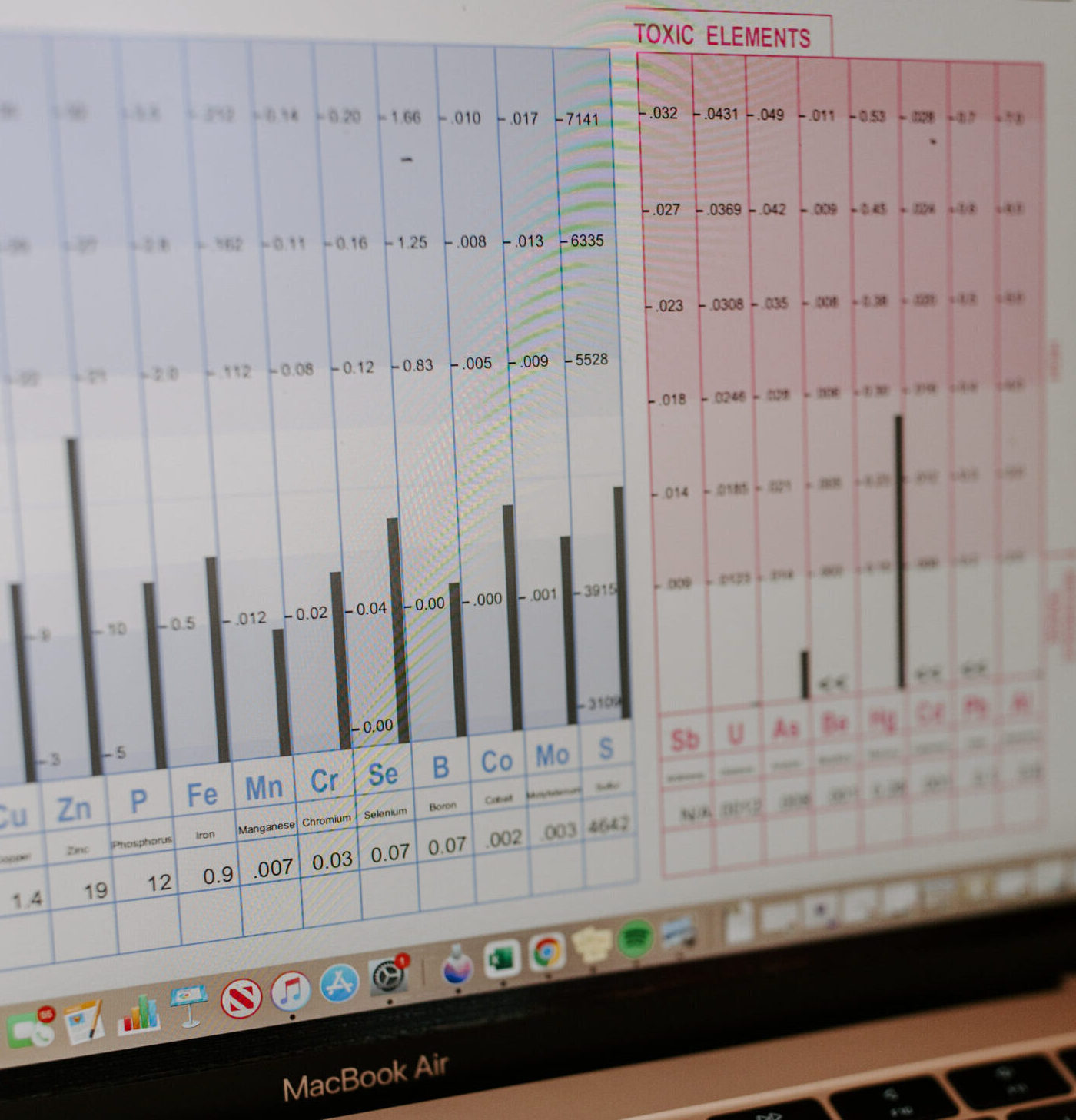
GIMAP stool test + HTMA mineral testing
H. pylori is a stomach infection that can quietly cause stomach inflammation and a lot of upper-GI symptoms. If food’s sitting heavy (especially with meat), you have acid reflux, nausea, upper bloating or “gnawing” like stomach pains that almost feel like hunger — H. pylori is one of the first things I want to check. Also, H Pylori is highly linked to skin issues like eczema and psoriasis.
Now onto low sodium (a biggie). Sodium is a crucial mineral for many systems in the body (i.e., basic hydration) but even more so for making stomach acid. Low sodium is one of the sneakiest root causes because your blood sodium barely moves, no matter what’s happening at the tissue level — your body guards it too closely. A hair test (HTMA) gives you a better picture of mineral status inside the cell. And since sodium and chloride literally make stomach acid, a low reading here can be a direct sign that your stomach acid production isn’t where it should be. Cue food reactions and a storm of symptoms from one pesky mineral deficiency.
2. Opportunistic Bacteria + High Steatocrit
GIMAP stool test
Beyond the stomach, I also want to know what’s happening in the gut. Most of the bacteria in the digestive tract should live in the colon (aka the gut). But if unwanted “opportunistic” bacteria starts to overgrow this will present as both horrific bloating, gas, and wonky bowel movements – but also feeling overly sensitive to high FODMAPs or high fiber foods.
If overgrowth is found, you always want to ask “what caused this to happen?”
Not breaking down foods is one of the main reasons. Steatocrit is a marker you can pull in a stool test that shows you how well you are breaking down fats. Aka how well you are making and moving bile. An elevated steatocrit is oftentimes correlated with overgrowth but also feeling gassy and overly sensitive to fats (even the healthy ones like eggs).
3. Low Elastase + Low Potassium
GIMAP stool test + HTMA mineral test
Continuing the conversation about not breaking down foods well, this alone, beyond being one of the root causes of overgrowth, can be a big driver of food reactions. You can test fecal elastase in the stool to get an idea of digestive enzyme output. When levels are low I must say I clinically don’t reach for digestive enzymes often, but I do reach for minerals.
Minerals, such as potassium, are needed to make digestive juices such as digestive enzymes. Just like sodium, I like to test potassium via a hair test (HTMA).
4. High Histamine + Copper
Blood work
Now lastly – histamine. One of my favorite topics to chat about.
High histamine or having a histamine intolerance is one of the most well known reasons for food reactions, but I don’t think many understand that you can actually improve histamine levels in the body. Symptom red flags of high histamine are oftentimes feeling overly sensitive to red sauces, tomatoes, yogurt, avocados, peanuts, eggs and the symptoms tend to be headaches, feeling fatigued, skin issues, loose stools, hard belly type of bloating, insomnia, and hot flashes/ feeling itchy. Having high histamine comes down to asking what is driving histamine up? Then asking why you aren’t breaking it down?
A big part of histamine build up comes from gut inflammation and more specifically overgrowth of histamine producing bacteria. So high histamine does in fact overlap with many of the root causes noted above.
Then to copper, another sneaky root cause not many know about. Copper is required to make DAO, the enzyme that clears histamine out of your gut. If you do not have optimal usable copper levels, DAO production declines, and histamine starts to build. Other nutrients like calcium and vitamin C are also crucial. Gut inflammation, aside from being a root cause of histamine build up, also impacts DAO production because an irritated gut lining produces even less DAO. This is also why having high histamine or a “histamine intolerance” almost never stands alone — it’s usually a symptom of something else going on underneath.
After working with hundreds of clients with abnormal and mysterious food reactions – I coined this case type the “sensitive sally”.
Every case being very different … from symptoms, to foods they are most sensitive to, to the root causes we unpack.
But one thing always remains a common theme – there is always a reason for their symptoms; you simply just have to dig and find them.
Rooting for you,
xx Jamie






Comments +